Everyday Items That Depend on Heavy Industrial Machinery You Never Knew About
There’s a wide gap between what consumers see and the heavy engineering that actually produces everyday essentials. Cheap and daily use items like packaging essentials, pencils, or paper products appear effortless and simple, which creates invisibility of the infrastructure behind these industrial processes. That perception is misleading, and it hides the true complexity of modern supply systems.
The truth is, behind the simplicity of day-to-day use items, there’s a layer underneath that’s non-stop, mechanical, relentless, and highly coordinated. And it decides whether entire supply ecosystems behave predictably or slip into disruption.
1. The Continuous Web Dependency behind Tissue and Cardboard Supply
Most people see a cardboard box as a finished object. In reality, it is the outcome of a continuous, high-tension manufacturing process where stability is measured in fractions of a second. Paper mills operate like extended kinetic systems; long, fast, and unforgiving. The real challenge is not production speed, but maintaining tension consistency across an uninterrupted web of material.
In these environments, operational stability depends on precise mechanical control:
- Torque regulation across long rolling lines
- Tension balancing during high-speed material movement
- Rapid correction of micro-deviations before they escalate
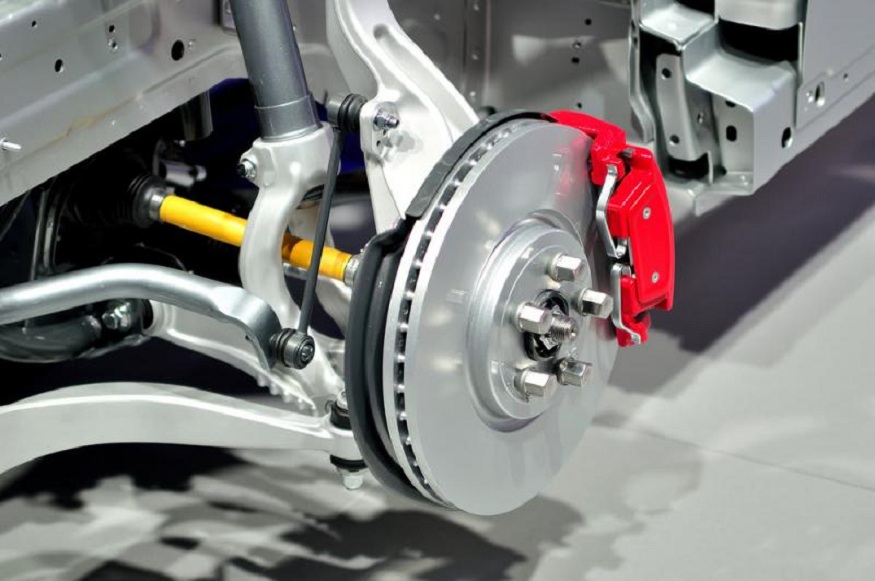
When control systems drift, material failure is immediate. That’s why braking and clutch assemblies are not peripheral components, they are the stabilizing logic of the entire operation. Industrial supplies and equipment specialists Kor-Pak often become foundational in maintaining predictable equipment performance cycles under continuous load. For operators, uptime isn’t a target, it’s the baseline requirement for survival in high-volume production.
Read More: Best Free Zones in Dubai for Startups and SMEs
2. High-Tonnage Extrusion Systems and the Making of Everyday Plastics
The plastic housing of a device or the molded casing of household equipment rarely reflects the force required to produce it. Behind those smooth surfaces are extrusion systems and hydraulic presses operating under extreme mechanical pressure, shaping raw material into precise geometries at scale.
Such an environment is defined by controlled force cycles:
- Repeated high-pressure stamping without deformation variance
- Thermal and mechanical stability during continuous extrusion
- Synchronized clutch/brake engagement across rapid production sequences
What makes these systems commercially critical is not just output volume, but repeatability under stress. Even small inconsistencies in cycle timing can affect material integrity. That’s where friction material systems become essential; not as consumables, but as engineered stability layers that prevent press failure. For production facilities, reliability in these systems directly determines whether consumer supply chains remain uninterrupted or experience downstream shortages.
3. High-Velocity Packaging Systems and the Start-Stop Reality of Food Supply
Every packaged food item on a shelf has passed through machinery operating at speeds most people never consider. Slicing, sealing, labeling, and routing occur in tightly synchronized sequences where timing is measured in milliseconds rather than seconds. These systems do not run continuously in a linear sense, they operate through constant acceleration and controlled stopping.
Read More: How Personal Loan Apps Are Making Borrowing Smarter and Faster
Operational continuity depends on:
- High-cycle clutch engagement without performance degradation
- Precise braking for indexing and product alignment
- Fatigue-resistant components across millions of repetitions
That is where industrial mechanical systems quietly support agricultural and food distribution networks. When even a single packaging line slows, inventory flow across retail systems can be disrupted. The engineering challenge goes beyond speed, to maintaining repeatable motion under extreme cycle frequency. That’s why high-reliability brake and clutch systems are treated as core infrastructure in food processing environments, ensuring consistency across global supply chains.
4. Municipal Water Systems and the Management of Massive Rotational Energy
Clean water delivery feels simple at the consumer level, but at the infrastructure level it is a coordinated system of high-inertia pumps, valves, and distribution networks moving vast volumes under constant pressure variation. These systems require controlled start-stop behavior to prevent mechanical shock and structural strain across municipal assets.
Key engineering considerations include:
- Torque absorption during pump startup phases
- Protection of motor assemblies from hydraulic shock loads
- Synchronization of rotational systems across distributed networks
Industrial couplings and torque management systems play a central role in stabilizing these transitions. Without them, mechanical stress would accumulate rapidly across infrastructure nodes. The objective is not only water movement, it is controlled energy transfer across systems that must operate continuously without failure tolerance.
In essence, behind every simple product or service interaction is a layered industrial environment operating under strict mechanical discipline. However, these systems must remain resilient to maintain stability under constant pressure. For organizations managing large-scale operations, the real competitive advantage lies in partnering with experts in industrial supplies and equipment who have expertise in understanding and controlling these unseen dependencies before they ever reach failure conditions.