
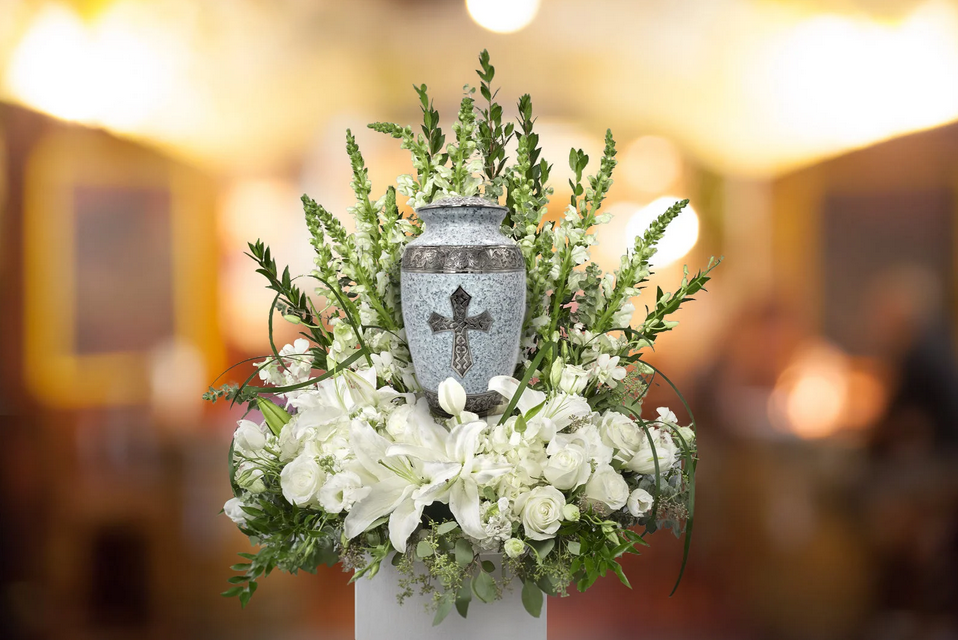
Personalization works best when it helps someone recognize the person being remembered. That recognition may come from a familiar name, a favorite landscape, a small symbol, or the color of something they loved. An urn does not need to tell a complete life story. A few carefully chosen details can carry a clear connection while leaving the design readable and comfortable to live with.
The practical task is to turn a family’s memories into a design that fits the available surface and can be reproduced accurately. Start by gathering ideas, then narrow them to one central theme. Confirm the urn’s specifications before approving any permanent work. This sequence gives the family room to be thoughtful while reducing the risk of mistakes that are difficult to change after engraving.
Find the detail people immediately recognize
Ask close relatives what image, place, or activity they most strongly associate with the person. Encourage concrete answers. “She loved nature” may lead to many unrelated designs, while “she watched the same pair of cardinals from her kitchen window” suggests something more particular. A recognizable memory provides a better starting point than a broad category of memorial decoration.
Look at ordinary routines as well as major achievements. A favorite garden flower, a well traveled coastal road, or a habit of reading beside a window can be just as meaningful as a career or public accomplishment. Families do not need to find an impressive theme. They need a detail that feels true to the person and can be expressed without excessive explanation.
Read More: Air Purifiers Explained: What the Specs Actually Mean
Write down the connection in a few sentences before selecting artwork. This small exercise can reveal whether the theme comes from a shared memory or merely from an attractive product photograph. Keep the written explanation with the family records. Later generations may appreciate knowing why a particular bird, mountain, or color was chosen, even if the meaning seems obvious to everyone making the decision today.
Choose the urn before finalizing the inscription
The available surface determines what can be added successfully. A broad wooden panel offers a different layout from the curved side of a metal vessel or a small attached plaque. Ask the seller which areas can be personalized and which methods are available. Confirm whether the work is performed directly on the urn, on a separate plate, or through another decorative process.
Urns should meet the family’s capacity and placement needs before personalization becomes the deciding factor. An appealing engraving option cannot compensate for a container that will not fit the intended niche or display location. Once suitable products are identified, compare the personalization areas, proofing process, and finished appearance alongside the underlying design.
Ask for examples on the exact material and finish being considered. Dark lettering on light wood may look very different from an engraved mark on a reflective metal surface. A digital mockup can show placement but may not reproduce texture or contrast faithfully. If legibility is important, request a close photograph of a comparable finished product under ordinary lighting.
Decide how much text is actually needed
Begin with essential identification. A full name and dates may be appropriate, but some families prefer a familiar name with a short phrase. Consider where the urn will be placed and who is likely to see it. A formal cemetery arrangement and a private home display may lead to different wording choices, especially when another marker already carries the full details.
Use the available area deliberately. Several lines of small text can become harder to read than a shorter inscription with more space around it. Ask for the maximum line length, available type sizes, and whether the seller will adjust the layout if a name is unusually long. The goal is to make the important wording clear without forcing every detail into the same design.
If a longer message matters to the family, preserve it elsewhere. A letter, memory booklet, or note stored with the records can carry a fuller tribute. The urn can then display the name and a short phrase that connects to that writing. This division keeps the visible design concise while retaining the words the family does not want to lose.
Use sample wording as a starting point
Simple original phrases can help a family find its tone. Examples include “Remembered in every shared story,” “Your kindness stays with us,” or “At home in our memories.” These are options to adapt, not formulas that every memorial should follow. A family expression may be more fitting than a polished phrase if it is something the person actually said or enjoyed.
Read the wording aloud. Notice whether it sounds like the family or like language chosen because it seems expected. Check whether a phrase has an unintended meaning when separated from its usual context. A private joke may make sense to siblings but confuse a future custodian. That does not necessarily rule it out, but it makes a written explanation especially useful.
When using text from a poem, song, scripture, or another published work, verify the exact wording and any permission needed for the intended use. Do not rely on an image found online or a quotation remembered approximately. For religious text or another language, ask someone familiar with that tradition or language to review the final proof rather than assuming an automated transcription is correct.
Select symbols with care
A symbol should have a clear relationship to the person’s life or beliefs. A tree might recall a particular family property, a boat might represent years on the water, or a musical motif might connect to a lifelong interest. Ask whether the symbol remains recognizable when reduced to the actual engraving size. Fine details can disappear on a small or curved surface.
Religious, military, professional, and cultural symbols deserve specific verification. Confirm the correct design with the family and the seller, and ask about any applicable permission or usage requirement. Similar looking emblems can have different meanings. Do not choose one solely because it appears in a general clip art category or resembles a symbol seen on another memorial.
Read More: Charles Spinelli on the Role of Insurance in Navigating Economic Uncertainty and Risk
If relatives suggest several unrelated motifs, choose one main element and consider preserving the others in accompanying materials. A crowded design may make every symbol less effective. Another option is to personalize separate keepsakes differently, when that fits the family’s arrangements. The main urn can remain visually coherent without requiring every person’s memory to be represented on the same small surface.
Treat photographs and handwriting as special projects
If a portrait is part of the design, ask what image quality the seller needs. A sharp original photograph generally gives the designer more information than a small screenshot or a picture downloaded from a messaging thread. Confirm whether the final work is printed, engraved, transferred to a plate, or reproduced using another method. Each process produces a different visual result.
Choose a photograph for the expression and clarity of the face, then review the proposed crop. A meaningful image may include several people or a complicated background that needs to be simplified. Ask to see the exact final image before production. Family members should approve that version rather than assuming the seller will choose the same crop they had in mind.
Handwriting can add a very personal connection, especially when taken from a familiar note or signature. Provide a clear scan and explain which marks should be retained. Ask the seller to flag anything that may become unreadable at the selected size. Keep the original document separately; the urn’s personalization should not become the only surviving version of an important handwritten message.
Use a deliberate proofing process
Choose one person to collect corrections and send the final approval. Several relatives can review the proof, but the seller should receive one consolidated response. Compare the name and dates with trusted records rather than checking them from memory. Inspect initials, spacing, punctuation, accents, and the order of multiple names. Read each line independently to catch errors that familiarity can hide.
Print the proof at approximately the intended size when possible. A design that looks clear on a large monitor may feel crowded on a small plate. View it from the distance at which the urn will normally be seen. Confirm that the text does not sit too close to a curve, border, illustration, or seam, and ask how accurately the proof represents the final placement.
Save the approved version and the seller’s confirmation. If a revision is made, label it clearly so an earlier proof is not used accidentally. Ask whether approval starts production immediately and whether any further changes are possible. This gives the family a clear point at which the wording and design become final instead of leaving the status uncertain across several messages.
Allow time for inspection and future understanding
Personalization can affect delivery time and return options, so confirm both before ordering. Distinguish a family change of mind from a production error and ask how each would be handled. If the service date is close, discuss a practical alternative with the provider. A temporary display or a later personalized plaque may be preferable to approving details under unnecessary pressure.
Inspect the finished work before the urn is filled or placed. Look at the spelling, orientation, contrast, and attachment of any plate, and compare the result with the approved proof. Keep the packaging while resolving a concern. If a design includes a removable element, retain the relevant instructions so a future custodian understands how it was intended to be handled.
The strongest personalization is specific enough to recall a person and simple enough to remain clear. A familiar name, one well chosen image, and a short explanation preserved with the records can achieve that. Taking time to check the practical details protects the family’s intention and turns a collection of ideas into a memorial that feels considered, accurate, and recognizably theirs.
You May Like

Hair Care Routine For Colored Hair